Wednesday, April 29, 2009

Special


Les Franken (Michael Rapaport) just wants to make a difference- an prospect that's elusive in his dead-end life. Working as meter reader, he is on the hook with his boss for being too nice and allowing manipulative people to not pay up, and he spends most of his time at home reading comic books and hanging out with his two best friends. On a whim, he decides to enroll in a drug study and allows a psychiatrist to test an antidepressant on him before putting it in for circulation.

Les takes his first pill, and chaos ensues. Convinced the medication has given him special powers, he begins hallucinating, and even 'reads' the psychiatrist's thoughts. Obviously excited at his new 'gifts' of telepathy, transportation, levitation, etc., he promptly tells his friends, who assume he's joking. The psychiatrist tells Les to dispose of the remaining pills, but Les hears him tell him telepathically to keep taking them and that some evil-doers might not want Les to have his special abilities so they have to cover it up.

Les now has a purpose, and he gets a suit for himself and begins his life of fighting crime by stopping a convenience store robbery by tacking the would-be (and armed) thief. As his desperate attempts to help neighbors (often putting innocent people through hell in the process) continue, it becomes more clear that he is, actually, in danger, though not in the way that he, in his delusional state, would expect.

"Special" begins as an offbeat, admittedly black comedy, but as Les become increasingly deranged the story takes a darker turn. Les wants to prove to himself and others that he can make a difference, but the unhealthy mixture of a bad psychological reaction, his hope to help people, and comic books make the situation a disaster for everyone involved.

The movie got confusing at times, but the main character was genuinely interesting. It was hard not to like him and his intentions, even when his paranoia became disturbing and violent. I've never seen Michael Rapaport in anything before this, but I think he did a decent job, balancing humor and delusion without going way over the top. It would have been nice to have seen the other characters developed a little more, but as a weird character study, it works.

It's good to see an original 'quirky' film. Lately, independent film-making has tried so hard to be original that it becomes dull. Troubled teens, dysfunctional families- you know the drill. It's difficult to place "Special." It's not dark enough to be compared to "The Living and the Dead," but it's not nearly as sweet as "Lars and the Real Girl" either. The story strains credibility, but if you think you might like a depressing, offbeat drama with a clever premise, you should maybe give this a shot. (Rated R)





Monday, April 20, 2009

Mozart and the Whale


In a fair amount of books and movies dealing with Autism and Asperger's, the related disorder, a scene is put where a person, generally a psychiatrist, explains the situation to another character. This is most likely not added to aid character or plot development. Probably this part is there to help people who are not 'in' the know about it, in other words, people who don't get what these conditions are so they'll understand the story better.

In "Mozart and the Whale," the main character, Donald (Josh Hartnett,) takes pauses in the beginning to talk about life with Asperger's. One might think these would be interesting, and a good departure from the 'shrink explains' cliche, but actually it becomes rather irksome. Judging from this movie, people on the autistic spectrum like nothing more than to sit around and discuss their conditions.

"Mozart and the Whale" is a romantic drama based on the memoir of the same title, which I've never read. The main characters, Donald and Isabella (Radha Mitchell,) have Asperger's Syndrome and meet during a support group meeting. The film chronicles how their relationship begins and the difficulties of trying to coexist in a romantic situation on the autism spectrum.

Well, I'm guessing some people might have no clue what Asperger's is. I suppose though, by telling you I will be making the same 'mistake' the film did and boring people who already understand it. I guess the difference was that Donald was discussing this with fellow aspergians that were already in a support group, and probably didn't need instruction. Then again, maybe you don't either. in that case, skip the following paragraph and cut to the chase.

Asperger's, in short, is a difference in the mind that cause difficulties relating to people, and in some cases, uncommon reactions to certain stimuli. It's related to a more commonly known condition, autism, but tends to be milder. People with Asperger's have problems with social skills, have certain interests they dwell on, and don't easily 'change gears.' Some of them are introverted, and others try to relate, but come off as sort of odd. Introversion, possibly, could be a reaction to being misunderstood. Generally they are gifted, and grow up to live more independently than people who are autistic.

In the beginning of "Mozart and the Whale," Donald meets Isabella, a new addition to the support group. Isabella is a bright, excitable, and socially challenged artist who immediately tells fellow group members about being raped as a teenager. Obviously she is angered when a severely autistic woman displays a grossly inappropriate reaction and begins laughing, although she doesn't understand the woman's problems, or her own flawed behavior. Infuriated, she is just stopped from leaving by Donald, who convinces her to keep going to meetings.

One of the group members has a nervous crush on Isabella, but she is more interested in Donald. Soon, she invites him to a costume party, which he doesn't arrive for. She comes and knocks on his door dressed as Mozart, and he joins her to walk with her, him in a whale costume (hence the title.) They spend time together, and even a near-breakdown from stimulus overload at the carnival doesn't ruin the night. Before departing, the have their first kiss.

After their bond deepens and they move in with each other, they start having problems in their relationship. Several times they leave each other, but get back together. However, problems arise when Isabella feels that Donald is unaccepting and is trying to 'normalize' them for the outside world, and she and Donald break up. The two of them feel lost without the other, and Isabella becomes suicidal, but they're afraid to get back together.

"Mozart and the Whale" is a decent movie, although at times it becomes irritating, especially at the beginning. When we are first introduced to the main characters, the director seems to be afraid we'll forget the condition of the group members, so we're constantly hit atop the head with 'autistic' symptoms. The characters mention their disorder just about every five minutes, and their 'interests,' such as mathematics or art, seem so hackneyed that it's difficult to relate to many of them.

On the plus side, the movie is made so that each person, in many ways, is vastly different from the others. Although they share Asperger's, their general personality and mannerisms are their own, though at times overdone. Actually, Donald and Isabella are not very alike, although they both lack proper social skills.

All in all, "Mozart and the Whale" seems like more of a tool to explain Asperger's than a proper story. I don't have the book to judge from, but the film is well-intentioned but plods heavily at times. It's definitely not the worst view of the Autistic spectrum, but it's far from the best (Rated PG-13.)


Trailer Not Available

Wednesday, April 15, 2009

Marley and Me


Warning: This review may contain spoilers. If you don't know how the movie or book ends, read at your own risk.

Based on the Bestselling memoir by John Grogan, "Marley and Me" is an emotional comedy drama that might have little to offer non-animal lovers. Despite deceptive trailers, it is not really a 'kid's' movie at all. This is a definite tearjerker, and will probably leave many adults in shambles by the end. Kids can watch it, it's just not a 'turn on the movie so mom can take a nap' kind of flick. It was mostly made for grownups, so if your five-year-old doesn't know the concept of death and starts asking "Where did Marley go?," don't blame me.

Celebrities Owen Wilson and Jennifer Aniston (of Rachel fame) play John and Jenny Grogan, respectively. As the story starts, they're a newly married couple living together. John is trying to get a job, and Jenny hopes to have children. After he gets into journalism, a friend recommends that he buy Jenny a pet dog, to ease her concern that that she is incapable of raising anything, including a plant.

So he drives Jenny to a dog breeder, without telling her firsthand his plan. There they are greeted by a litter of adorable Labrador Retriever puppies. She's delighted, and immediately sets out to pick one. One puppy stands out. It's on clearance, and is a great deal cheaper than the others. To save some money, the couple buys him. Yep, you guessed it. That's Marley. Shortly afterward, Jenny has to leave town so John looks after Marley, named by him from the famous musician.

From day one, Marley is a handful. The first night, he howls loudly from his bed in the garage until John lets him inside. While John goes to pick up Jenny, Marley tears apart the house. Despite his awful behavior, the two love him unconditionally and (dare I say it) spoil him rotten. Shortly afterward, Jenny gets pregnant but miscarries. To make his grieving wife feel better, John takes her on a trip to Scotland and leaves Marley in the care of an unsuspecting young woman. By the time they return, the practically hysterical dog sitter informs them that "That is not a dog. That is evil with a dog face."

Eventually, Jenny gets pregnant again and gives birth to a healthy baby boy. By their second living child, she starts to become overwhelmed by the pressure of caring for rwo small kids and a rambunctious dog. At that time, Jenny tells John to get rid of Marley, so he sends him to the friend's house until she calms down. The years go by, and Marley becomes less of a burden and more of a faithful (although perhaps not useful) member of the the household. As he stays by them and his muzzle grays, the viewer becomes aware that in movie dog years, he's getting old.

I'm a dog owner, and therefore that makes me me more fond of this film. People who don't like dogs are unlikely to find much in this two hour family saga. Don't get me wrong, the humans play an important role too, but most of the laughs (near the beginning) and tears (around the end) revolve around Marleys effect on the people around them. When the dog aspect comes to a halt, Alan Arkin provides comic relief as John's eccentric boss.

Okay- I cried- you might be a stone not to, but one aspect of "Marley and Me" irked me. Sure, a beloved old dog reaching the end of his life is many people's weak spot. The thing is, the director obviously knows that and plays it to the best of his abilities.The subject is enough to depress, but he seems to feel he needs to ham it up as much as possible. You can almost hear him in his studio, telling his crew to turn the melodramatic music up.

"You're not crying yet? How about I have the little boy play videos of young Marley while the dog breathes his last? Are you crying now? Huh? HUH?"

This would be unforgivable if the movie did not move audiences, but I'll admit that most of my family was practically in tears by the film's close. Although it feels like sort of a cheat, genuine emotion and decent acting went into this production, so I can only complain so much. I think it's great film for dog lovers and "chick flick" fans alike. Athough I doubt that 'chicks' will be the only ones moved by it (Rated PG.)


No Trailer Available

Monday, March 30, 2009

Death at a Funeral (2007)


Bizarre, unabashedly black comedy chronicles a dysfunctional British family mourning the death of their patriarch. Well, they try to, anyway. Family tensions give way to total chaos with the arrival of a mysterious dwarf blackmailer, Hallucinogens accidentally passed around, and Uncle Alfie, an obnoxious foul-mouthed old man.

In the beginning, we are introduced to a whole host of strange characters. There's a slightly hypochondriac man, obsessed with a pigment mutation on his hand. There's a guy who's a successful novelist and his writer wanna-be brother. Well, I'm not going to rattle off every single person in the movie. I can't remember most of their names, actually.

The most normal people in the bunch are a woman named Martha and her quiet fiance' (Alan Tudyk.) Before they arrive at the funeral, they stop at a relatives place. Simon is stressed out, and Martha gives him a dose of Valium to calm his nerves. What they don't know is, it's not Valium. The owner of the bottle is a drug addict, and it's actually a Hallucinogenic concoction. Unfortunately, the drug goes straight to Simon's head and, sure enough, he begin behaving strangely and seeing things.

Simon is already disliked by the deceased's brother, Martha's father, for unknown reasons. Apparently, though, showing affection towards rooster garden ornaments and stumbling around in a drug-induced haze doesn't do much for your popularity. Things get worse when Simon sees something 'moving' inside the coffin and knocks it to the ground, spilling the body and sending the dead man's wife into tears.

The not-so-successful guy, who's busy writing the eulogy his friends want his brother to do, is surprised to see a strange dwarf standing by the table. Well, I'd hesitate to spoil this, but the preview will divulge it anyway. The unnamed dwarf takes takes him aside and shows him a pack of pictures of the small man and his dad together. Professing that they were good friends, he flips through the multiple photos of the two together.

The son is confused that he has never seen or heard of the dwarf, being that they were apparently close. The truth, however, comes out with the last picture. This one is a graphic shot of dad and the dwarf in an- um- compromising position. As if finding out your dad had an alternate lifestyle that he shared with a little person wasn't enough, he is informed that if the dwarf isn't given some of the will, the photos will be shown to the entire family, shocking them and traumatizing his mourning mother.

So you thought family had issues? The son is already having financial problems, so he is less than happy to hand the money over. However, he is even less keen on driving his mum to an early grave. So he asks his brother for help, and they try to come up with a way to make the guy leave.

Meanwhile, Simon has barricaded in the upstairs bathroom playing with tissue and his fiance', trying to get him to come out, is being leered at by a creepy guy she once had a one-night stand with. Wheelchair-bound Alfie's toilet problems only complicate things. To put it simply, pretty much everything that can happen does. The film's events tell the story of possibly one of the most chaotic, awful funerals in the history of cinema.

Make no mistake- this film's preview makes it look far inferior to the actual result. Though not without it's flaws, "Death at a Funeral" is funnier than many films I've seen this year. It's lines and timing were often hilarious. Sometimes, however, I felt they went too far in the humor's dark weirdness. At some points, I was close to being offended, and found little entertainment in the increasingly sick situations that were playing out.

Also, Alan Tudyk appears to get most of the great lines . Even though the wanna-be writer's beginning of his eulogy- "it seems that my father has more friends now that he's dead than when he was alive-' is somewhat funny by itself, it is Simon's grossly inappropriate reaction (hysterical laughing) that really drives the joke home. Simon, in fact, has so many funny parts you feel the directer should share the wealth a bit.

My new philosophy, though, is this- don't rag on a movie that makes me laugh as hard as this one did. Fans of dark humor will probably like it even more than me. This is definitely one of those movies that exceeded and soared beyond my original expectations. (Rated R)

Recommendation- Another high-speed farce you can see concerning myriad disasters befalling a family during a gathering is Only Human


Wednesday, March 25, 2009

The Producers (2005)


To tell you the truth, I haven't seen the 1968 original. Seriously. It's on my Netflix queue. So is you're a "The Producers"-the-way-it-was addict, trying to figure out if the remake can measure up to the greatness of the first, I can't help you. Judging from the reviews, I'll guess that if you are in that group, you will not enjoy this. Actually, if you are not familiar with "The Producers" in any way, shape, or form, you may not get it. It has a fairly small audience. I will just get on with it and tell you about the movie, and if you think it sounds stupid, for you, it probably will be.

"The Producers" is, first and foremost, a musical. The film starts in 1950's New York, with a catchy song performed by a group of people who have just seen "the worst show in town." The show is so bad, in fact, that they feel the need to through music, announce the play's crappiness to the world. In the song, they mention the play's inept director, Max Bialystock, "a bum." Next thing we know, we are taken to Bialystock's apartment, who we discover, is all they say and more.

Max (Nathan Lane) was, amazingly, once a successful producer, but as he aged he became less and less popular and his plays became increasingly dreadful. He lives in an apartment crammed with set design junk that looks like it would look better off at a yard sale. To get by, he prostitutes himself to old ladies looking for "one last thrill on their way to the cemetery." Wow. Max, to put it simply, is a mess. Of course, it is obvious he will be teamed up with a man who is almost more screwed up than he is.

The man is Leo Bloom (Matthew Broderick,) a nervous, timid accountant who arrives at about the same time as one of Max's 'backers,' "Hold Me, Touch Me" shows up. When the the sex-hungry elderly lady comes to the door, Leo is unceremoniously shoved into a bathroom while she is let in and Max and her engage in a weird "game." When she leaves, Leo comes out and informs Max that although he's sorry he caught him "feeling up the old lady," he has something wrong with his account.

It turns out that Max has been cheating with his money, but he convince Leo to "move some decimals around" While Max naps on the couch and Leo looks over the account, he says offhandedly that under the right circumstances, a producer could make more money with a flop than he could with a hit. Max, now awake, instantly comes up with a plan to get himself out of the hole financially. He and Leo, he decides, will intentionally make a horrible play and claim that they didn't get their money. The authorities, then, will never guess that Leo and Max's play was deliberately bad.

Leo isn't keen on they plan, and Max proceeds to chase him all over New York City singing "We Can Do It." Leo refuses, and it take him some time in his dead-end job with his horrible boss and another musical number to make him realize that he does, in fact, want to go through with it. So he quits his job and informs Max that he's willing to find the worst play ever written and produce it. They spend the rest of the night pouring over play, and finally find the flop. The title- "Springtime for Hitler." The writer- Franz Leibken. The play, in Max's words, is "practically a love letter to Hitler." Confident that it will offend hundreds of people, the go meet Franz Leibken to get him to sign permission- saying, of course, that his play is a masterpiece.

Now here's where things get really wacky. Franz (Will Ferrell,) a singing, dancing nazi, is more than happy to sign, after making them join with him in the fuhrers favorite song and take the Seigfried oath to honor Hitler. The two aren't comfortable with this, but will do anything to get paid. At long last, Franz signs. Good- now all they need is a director and actors.

The director, in my personal favorite scene, is a flamboyant, outrageously stereotyped gay drag queen, Roger De Bries. Now, you would think the last thing on a homosexual's mind, who were actually targeted during the Holocaust, would be to be involved with a play praising nazism. Luckily for Max and Leo, neither Roger or his houseful of gay roommates are particularly bright, and their main concern is that the play is too downbeat. So, to prove their point, they sing a not very subtly insinuated song, "Keep it Gay" (My favorite!) Eventually, however, Max and Leo convince them to participate.

Their lead position for lead actress is filled by ditzy Swedish sexpot Ulla, who both Leo and Max fall head-over-heels for. The other roles are soon taken, and the play begins, with both men positive it will flop. The situation, though, soon takes an unexpected and chaotic turn.

This film hold a different experience for me each time I watch it, which isn't necessarily a good thing. The first time I didn't get it, and I left halfway through. The second I decided to give it another chance, and sort of liked it. The third, I had decided I really liked it, though I wasn't exactly sure why. And the fourth time? As it began, I couldn't wipe the grin off my face. As it went on, though, I began to glance at the time on the DVD player. Even the gay scene wasn't as enjoyable as usual. The film really came to life at the musical sequences, but at other times it was drawn-out and passe'.

Not that I disliked it, overall. Nathan Lane was consistently amusing as Max. Certain scenes were so over-the-top that me and my brother laughed and smiled with glee. Other parts we laughed, but the laugh was slightly more of a groan. At the end, we liked it, but I at least was glad to go to bed.

"The Producers" isn't a bad movie. Or if it is, it's a bad movie that causes me to smile, which makes it not so bad. I cannot recommend or disrecommend it, just say that it grew on me, and I liked it enough to Netflix the original. If you hate it, I understand, but that doesn't make the weird enjoyment that I experience putting the DVD in the player go away.(Rated PG-13)


Trailer Not Available

Friday, March 20, 2009

Charlie Bartlett


"Charlie Bartlett" is an amiable comedy/drama, made better by Anton Yelchin's performance and a good premise. I cannot pretend that it is an amazing movie, nor can I claim that it is extremely original (in fact, it is in a long line of indie teen 'quirkies.') I did, however, like this film, and I thought that, although it was far from mind-blowing, it was fun and clever (if a bit used.)

Yelchin plays the title character, an misfit rich kid who wants desperately to be liked. In his quest for popularity, he is caught making fake IDs for fellow students and kicked out of his Elite private school. This is not his first expulsion, and his mom decides to try sending him to public school, as well as to a psychiatrist for his problems paying attention.

When Charlie goes to public school, he doesn't exactly do a good job of fitting in. Actually, he arrives at school in his old uniform and armed with an briefcase. This makes him a clear target for the school bully, who promptly sticks his head down a toilet. On his way home from the first day, the only person who sits next to him is Len, a retarded kid his age.

At the psychiatrist's, he is prescribed with Ritalin, to see if the drug helps him concentrate. When he takes it, it effects him quite the opposite. Twitchy, drugged, and temporarily disoriented, he runs through the neighborhood in his underwear, jerks like Tourette's Syndrome sufferer, and spends hours talking to himself in his empty swimming pool. After it's over, he comes up with a fool-proof way to make friends- pass on the Ritalin to his classmates.

As it turns out, the drugs are a big success. The students, invigorated by the temporary buzz, all but accept him as one of their own. Later, one depressed-looking student asked him for some real advice on how to deal with his panic attacks. So Charlie goes to his shrink, passing off the boy's illness as his own and getting some pills, as well as looking up information on it so that he has some advice to give him.

Soon enough, multiple students come to him looking for help with their problems. He even gets the attention of the principal's pretty daughter, Susan (Kat Dennings.) However, Susan's father (Robert Downey, Jr.) is convinced that Charlie is up to something, and sure enough, disaster strikes, Charlie is blamed, and is told to stay away from Susan. By this time, he's figured out that the principal has some problems of his own. As people's issues weigh down on him, he begins to realize that he can't be a grown-up for everyone.

Charlie is a likable character, despite his messed-up tendencies. The first thirty-or-so minutes of this film are often very humorous, especially Charlie's behavior while high on Ritalin and his over-the-top performance at the audition. Unfortunately, about one-third through it decides to become serious, upsetting the tone. Some seriousness is expected of a movie like this, but the directer forgets to add more humor around the ending, leaving the story tilting precariously between quirky-funny and sad-dark. Also, some of the aspects of the plot are illogical and feel 'written.' I guess I shouldn't take the movie so seriously, but even in a comedy, you generally shouldn't stretch too much credibility. For instance, why does Charlie feel the need to appoint the school bully to help him hand out pills? Wouldn't it be easier to get Len, who already likes him, to aid him? The 'bully' twist is there to help the story, for sure, but I wondered why he would risk getting his head shoved down a toilet instead of just getting his retarded friend to help.

Although it is not 'incredible' by a long shot, "Charlie Bartlett" is, all in all, a likable film. it's a movie that's good to rent if you're looking for something that has some brains but doesn't require quite as much thinking. I know it most likely won't win any Academy Awards, but I enjoyed it and found it entertaining (Rated R.)


Saturday, March 14, 2009

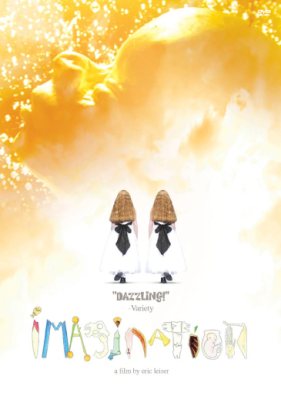
Imagination

I'll admit it, I didn't come to this film with high hopes. I had seen Netflix reviewers trash it again and again, but I hoped that it would at least be 'original.' By the middle, when the talking fruits showed up, I was waiting for the one hour ten minutes to end. By the credits, I was wondering how such a horrific trainwreck ever came into existence. There's a vague possibility that this could have been a good, albeit strange, film. What went wrong? As it turns out, almost everything.

The plot (if you can call it that) follows two prepubescent girls named Anna and Sarah through their joined imaginary realities. Their parents are struggling- Sarah is nearly blind, and Anna has Asperger's Syndrome, a form of autism. As their psychiatrist attempts to understand their increasingly bizarre fantasies, we watch dream-like sequences done through stop-motion animation and special effects. When tragedy strikes, the girls retreat further into their imaginations, causing the psychiatrist to wonder what the visions mean.

That's pretty much the sum of the story, avoiding spoilers. It actually was an interesting idea, visualizing two introverted girls' secret world. The result, however, is horrendous.

First of all the acting is pathetic- hard to watch. As you watch the actor's pitiable attempts to be 'emotional,' you wonder how they could have possibly set themselves up for this kind of humiliation. It feels like the director went out to a local park, watched people for a while, and chose a few, asking them to be in a movie. They agreed, despite their complete lack of dramatic skills. The two girl's performances are understandable- they're still young, after all. However, watching the adults, especially the psychiatrist, desperately trying to play a role, leaves you shaking your head in horror.

The other problem with "Imagination" is that Anna's 'Asperger's Syndrome' and Sarah's blindness are pointless; more or less just there to rationalize bizarre dream sequences. What may of helped this film is to explain why the girls 'live in a world all their own.' Anna, we are told again and again, 'can't socialize,' but we never see her interact with practically anyone in the film. It would have been interesting- more interesting, perhaps, than the weird trip scenes, to try to explain Sarah and Anna's need to go into their own realities. Ben X did this efficiently- We understood why the main character, Ben, became obsessed with the virtual world and tuned out of real life. "Imagination," however, is obviously a miserable attempt to play with hallucinogenic effects and claymation, without a glimmer of character development or logic to make sense of it.

There is one good quality, however. Even though the filmmakers got so many other things wrong, their skills at claymation are apparent. One scene, in particular, is darkly creative and weird, in a good way. In this case, the bizarre imagery actually attracted my attention. It makes you kind of wish they would kick out the actors and let the clay figures take center stage.

All in all, I wouldn't recommend this movie to practically anyone, unless they are especially fond of weird for weird's sake. Do not watch this looking for a realistic or informative view of Asperger's- you won't find it here. If you want something unusual, watch "The Fall"- in fact watch practically anything else. Just stay far away from this bizarre, pointless mess of a movie. (Rated NR) *


Trailer Not Available